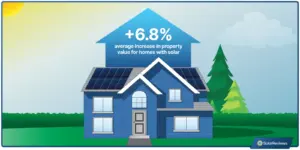
Homeowners seeking an affordable residential solar panel installation with a no‑obligation consultation can cut utility bills and increase property value within weeks, not months. By partnering with certified installers who assess roof orientation, local sun‑hour data, and financing options, you receive a tailored proposal that balances upfront cost against long‑term energy savings. This streamlined approach eliminates guesswork and lets you compare real‑world ROI before signing any contract. For a quick overview of how solar upgrades affect market value, see our guide on boosting home value with solar panel installation.
Why an Immediate, Free Consultation Matters
In 2026, the average residential solar system costs US$2.85 per watt after federal tax credits, according to the U.S. Energy Information Administration (EIA). However, the true expense varies dramatically based on location, roof type, and financing structure. A free, on‑site evaluation provides:
Table of Contents
- Why an Immediate, Free Consultation Matters
- Real‑World Case Study: From High Bills to Energy Independence
- 2026 Data Snapshot: Solar Adoption Trends
- Step‑by‑Step Guide to Secure an Affordable Installation
- 1. Schedule the Free Consultation
- 2. Receive a Detailed Proposal
- 3. Review Incentives and Tax Credits
- 4. Finalize Financing
- 5. Permit, Install, and Commission
- Common Pitfalls and How to Avoid Them
- FAQ – Quick Answers to Frequently Asked Questions
- What is the typical ROI for a residential solar installation in 2026?
- Can I install solar panels if I rent?
- How much space does a 5 kW system require?
- Do I need a battery to achieve savings?
- Future Outlook: Solar’s Role in Home Energy Strategy
- Take the First Step Today
- Accurate sizing: Ensures the system meets your household’s kilowatt‑hour demand without over‑ or under‑installing.
- Financial clarity: Breaks down payback periods, highlighting options like solar loans, leases, or power‑purchase agreements (PPAs).
- Regulatory compliance: Identifies local permitting requirements and eligibility for state‑level incentives.
Real‑World Case Study: From High Bills to Energy Independence
Jane Martinez, a suburban homeowner in Austin, Texas, faced monthly electricity charges exceeding $250. After a complimentary assessment, she installed a 7.2 kW rooftop system financed through a low‑interest solar loan. Within 12 months, her utility bill dropped to under $30, and the system’s net‑metering credits earned her an additional $180 annually. By 2026, the cumulative savings surpassed $3,200, delivering a 15 % increase in her home’s resale value, as reported by the National Association of Realtors.
2026 Data Snapshot: Solar Adoption Trends
According to the Solar Energy Industries Association (SEIA) 2026 market report:
- Residential solar installations grew by 19 % year‑over‑year.
- The average payback period dropped to 6.8 years due to higher efficiency panels and expanded tax incentives.
- Homeowners who combined solar with battery storage saw a 23 % increase in property valuation.
These figures underscore that a cost‑effective solar solution is no longer a niche luxury but a mainstream financial strategy.
Step‑by‑Step Guide to Secure an Affordable Installation
1. Schedule the Free Consultation
Contact a certified installer and arrange a site visit. Provide recent electric bills and any shading concerns (trees, chimneys).
2. Receive a Detailed Proposal
The proposal should include:
- System size (kW) and expected annual generation (kWh).
- Itemized cost breakdown (panels, inverter, mounting hardware, labor).
- Financing options, including any solar panel financing offers or lease terms.
- Projected savings and payback timeline.
3. Review Incentives and Tax Credits
Leverage federal and state programs. For example, the 2026 Federal Solar Investment Tax Credit (ITC) remains at 30 %, and many states offer additional rebates. Our government incentives guide outlines each credit’s eligibility criteria.
4. Finalize Financing
Choose the model that aligns with your cash flow:
- Cash purchase: Maximizes long‑term savings and eligibility for the full ITC.
- Solar loan: Low‑interest rates (often <4 % APR) allow you to own the system while spreading payments.
- Lease/PPA: Minimal upfront cost, but lower overall ROI.
5. Permit, Install, and Commission
Professional installers file permits, schedule the build, and conduct post‑installation testing. A final inspection by the local utility ensures interconnection approval.
Common Pitfalls and How to Avoid Them
- Ignoring Roof Condition: Delaying roof repairs can lead to future re‑installation costs. Verify roof lifespan before signing.
- Choosing the Cheapest Quote: Low‑ball offers may use lower‑efficiency panels, resulting in higher LCOE (levelized cost of electricity).
- Overlooking Maintenance: Panels require periodic cleaning and inverter checks. Include a maintenance clause in the contract.
- Missing Incentive Deadlines: Some rebates expire quarterly. Confirm timelines during the free consultation.
FAQ – Quick Answers to Frequently Asked Questions
What is the typical ROI for a residential solar installation in 2026?
Based on SEIA data, the average internal rate of return (IRR) sits around 12‑14 % when combining tax credits, net‑metering, and utility rate escalations.
Can I install solar panels if I rent?
Yes, many leasing companies offer “solar-as-a-service” agreements that allow renters to benefit from lower electricity rates without owning the hardware.
How much space does a 5 kW system require?
Approximately 300 sq ft of unobstructed roof area, oriented within 15° of true south (or north in the southern hemisphere) for optimal performance.
Do I need a battery to achieve savings?
Batteries enhance resilience and enable time‑of‑use arbitrage, but they increase upfront cost. For most households, net‑metering alone delivers sufficient savings.
Future Outlook: Solar’s Role in Home Energy Strategy
By 2030, the Department of Energy projects that over 40 % of U.S. homes will have some form of solar generation. Early adopters who secure an affordable system now position themselves to benefit from emerging technologies such as bifacial modules and AI‑driven energy management platforms. Moreover, integrating solar with home automation can further reduce consumption, creating a virtuous cycle of efficiency and cost reduction.
Take the First Step Today
The combination of a no‑cost, professional assessment and transparent pricing makes the transition to clean energy both practical and financially sound. Schedule your free consultation now, compare the customized proposal against the benchmarks presented here, and make an informed decision that will pay dividends for years to come. For a comprehensive walkthrough of the installation process, explore our complete residential solar panel installation guide for 2026.