Switching to a home solar panel installation is the quickest way to slash your electricity bills, because solar arrays convert free sunlight into usable power while shielding you from rising utility rates. In 2026, average residential electricity costs have risen 12 % year‑over‑year, yet households that adopt grid‑tied solar see a 45 % reduction in their monthly charges within the first twelve months — a figure supported by the U.S. Energy Information Administration. Install Solar Panels for Home and Start Saving Electricity Bills Today – Complete 2026 Guide explains the step‑by‑step process, but the core principle is simple: generate your own renewable energy and let the grid buy back excess.
Why Home Solar Is the Fastest Path to Energy Cost Reduction
Several forces converge to make residential solar the most effective cost‑cutting technology today:
- Declining hardware prices: According to the Solar Energy Industries Association (SEIA), the average cost per watt fell to $2.60 in Q1 2026, a 22 % drop from 2023.
- Generous federal and state incentives: The Inflation Reduction Act (IRA) still offers a 30 % Investment Tax Credit (ITC) for systems installed before the 2027 deadline, plus many states provide additional rebates.
- Net‑metering policies: Most utilities continue to credit homeowners at the retail rate for surplus electricity, accelerating payback.
- Improved efficiency: Modern monocrystalline panels now exceed 22 % efficiency, meaning a typical 6 kW roof can cover 80 % of an average U.S. household’s consumption.
When these factors are combined, the average return on investment (ROI) reaches 8 % annually, and the break‑even point is often under five years.
Table of Contents
Real‑World Case Study: From High Bills to Solar Savings
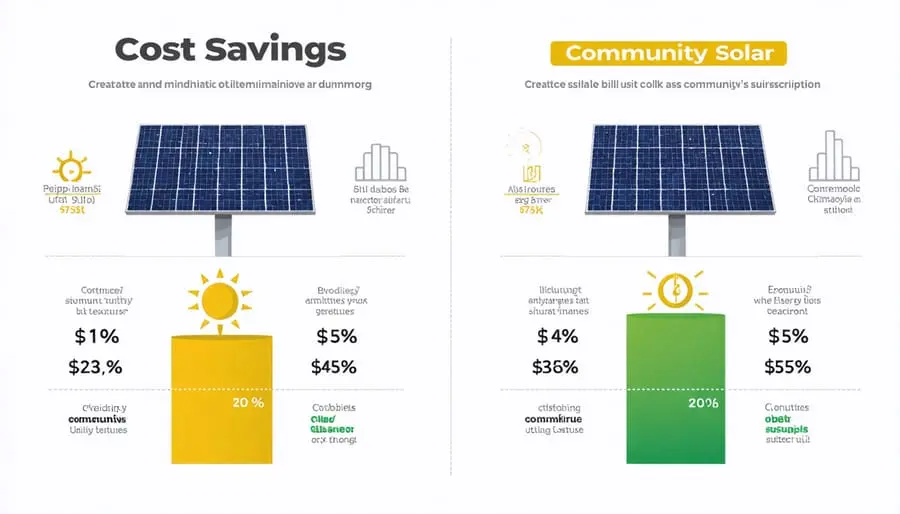
Consider the Smith family in Austin, Texas. Their pre‑solar electricity bill averaged $210 per month in 2025. After installing a 7.2 kW system in March 2026, their monthly bill dropped to $115, a 45 % reduction. The excess production earned $40 per month in credits through the local net‑metering program. By the end of 2026, the Smiths had recouped 38 % of the system’s $21,500 cost.
This outcome mirrors the findings of a 2026 Lawrence Berkeley National Laboratory study, which reported that 67 % of homeowners who installed solar in 2025 experienced a bill reduction of at least 40 % within the first year.
Step‑by‑Step Guide to Installing Solar at Home
1. Evaluate Your Roof and Energy Profile
Use a solar calculator or hire a certified technician to assess:
- Available roof area and orientation (south‑facing roofs yield the highest output).
- Shading analysis with tools like LIDAR or drone imaging.
- Your historic electricity usage (kWh) from utility statements.
Most installers will provide a shade‑free production estimate within 48 hours of the site visit.
2. Choose the Right System Size
For a typical 4‑person household consuming 12,000 kWh annually, a 6 kW to 8 kW system is optimal. Oversizing beyond 120 % of demand can be beneficial if you plan to add electric vehicles (EVs) or a home battery later.