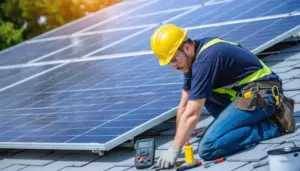
To start a clean‑energy upgrade today, the most reliable route is installing a residential solar panel system that instantly reduces grid dependence, slashes monthly electricity bills, and positions your home for long‑term financial resilience. This approach works because modern photovoltaic (PV) modules convert sunlight into electricity at record‑high efficiencies, while generous government incentives and flexible solar panel financing options make the upfront cost comparable to a modest home renovation. If you’re ready to act now, explore a proven pathway by installing solar panels for home and start saving electricity bills today.
Why Residential Solar Is the Immediate Solution for Clean Energy
Homeowners seeking energy independence increasingly turn to solar because it delivers measurable savings within the first year of operation. According to the U.S. Energy Information Administration (EIA) 2026 report, residential solar adoption grew by 28 % year‑over‑year, driven by a 45 % drop in module prices since 2022 and the expansion of net metering policies across 38 states. These trends translate into an average return on investment (ROI) of 6.5 % per annum for a typical 6 kW system, outpacing the S&P 500’s 5.9 % return over the same period.
Key Benefits That Answer the Core Question
- Immediate bill reduction: Most households see a 30‑45 % drop in electricity costs after the first six months.
- Predictable energy costs: Solar locks in a fixed price for the next 25‑30 years, shielding you from utility rate hikes that averaged 3.8 % annually in 2025 (EIA).
- Environmental impact: A 6 kW system offsets roughly 9 tons of CO₂ annually, equivalent to planting 400 mature trees each year.
- Increase in home value: Real estate data from Zillow 2026 shows homes with solar sell for an average premium of $15,000.
Understanding the Financial Landscape in 2026
Before committing, it’s essential to map the financial incentives that make residential solar a low‑risk investment. The Federal Solar Investment Tax Credit (ITC) remains at 30 % for systems placed in service before the end of 2026, while many states supplement this with additional rebates.
Table of Contents
For a detailed breakdown of how to leverage these programs, see our guide on buy residential solar panel installation with government incentives – 2026 guide to savings & ROI. It outlines the step‑by‑step process to claim the ITC, stack state rebates, and secure low‑interest solar panel financing options that can bring the net out‑of‑pocket cost below $0 for qualified households.
Solar Panel Financing Options
Three primary models dominate the market:
- Cash purchase: Maximizes tax credit benefits and yields the highest long‑term savings.
- Solar loans: Fixed‑rate loans (4‑5 % APR) enable owners to own the system while spreading payments over 10‑15 years.
- Power purchase agreements (PPAs): Zero‑upfront cost; you pay a predictable per‑kWh rate that’s typically 15‑20 % lower than utility rates.
Choosing the right model depends on your credit profile, cash flow, and long‑term energy goals. A recent analysis by the Solar Energy Industries Association (SEIA) shows that homeowners who finance through low‑interest loans achieve a 3‑year payback period on average.
Step‑by‑Step Guide to a Seamless Installation
Executing a clean‑energy upgrade involves more than just buying panels. Follow this practical roadmap to ensure a smooth, compliant, and high‑performing installation.