Installing solar panels on a residence is the fastest way to cut electricity bills, reduce carbon footprints, and gain long‑term energy independence; the process begins with a professional site assessment, followed by a customized design that matches your roof’s orientation, local solar irradiance, and budget. By partnering with certified installers, homeowners can tap into federal tax credits, state‑level incentives, and net‑metering programs that often offset up to 70 % of the system cost within the first three years. For a seamless experience, book a home solar installation service with certified technicians today and start seeing savings on your next utility statement.
Why Solar Panels Are the Smartest Investment for Homeowners in 2026
The shift toward renewable energy is no longer a niche trend; according to the International Renewable Energy Agency (IRENA), global solar photovoltaic (PV) capacity reached 1,200 GW in 2025, a 23 % increase from the previous year. In the United States, the U.S. Energy Information Administration (EIA) reported that residential solar installations grew by 18 % in 2025, driven by falling panel prices—average cost per watt dropped to $2.35, the lowest point in a decade. These market dynamics translate into a clear financial upside: a typical 6 kW system now delivers a payback period of 5‑7 years, after which the electricity generated is essentially free.
Key Financial Benefits
- Federal Investment Tax Credit (ITC): Homeowners can claim a 30 % credit on the total system cost through 2032, as confirmed by the U.S. Department of Energy.
- State incentives and rebates: Many states, such as California and New York, offer additional rebates ranging from $500 to $3,000 per kW installed.
- Net metering: Excess electricity fed back to the grid earns credits that appear on your utility bill, effectively turning your roof into a revenue‑generating asset.
- Increasing electricity rates: Residential rates have risen an average of 3.2 % annually since 2020, making the savings from solar even more compelling.
Step‑by‑Step Guide to Installing Solar Panels at Home
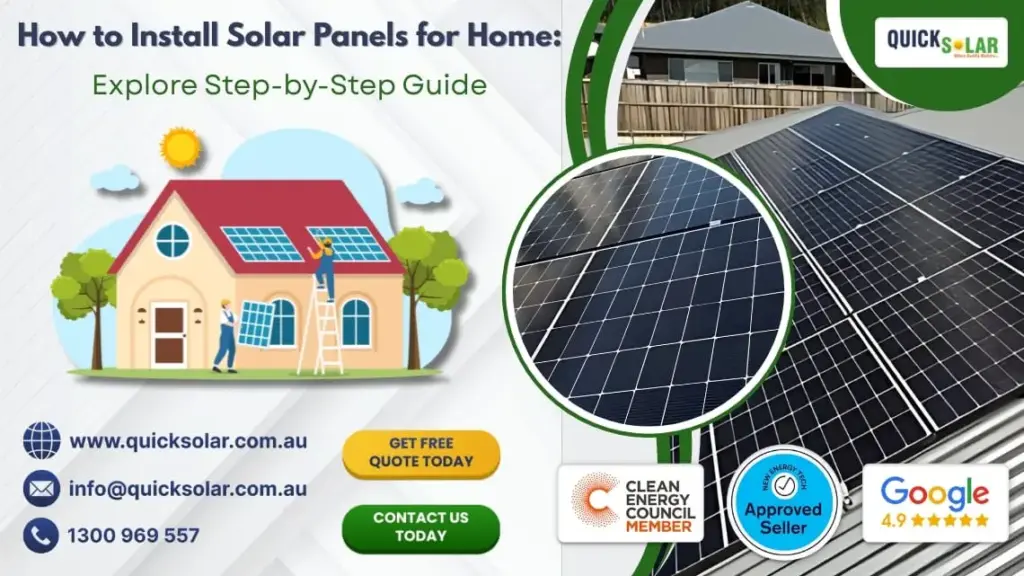
Transitioning to solar power is a multi‑stage process that requires careful planning, permitting, and execution. Below is a practical roadmap that any homeowner can follow, whether you’re a DIY enthusiast or prefer professional installation.
Table of Contents
- Why Solar Panels Are the Smartest Investment for Homeowners in 2026
- Key Financial Benefits
- Step‑by‑Step Guide to Installing Solar Panels at Home
- 1. Conduct a Preliminary Energy Audit
- 2. Evaluate Roof Suitability
- 3. Choose the Right Technology
- 4. Secure Financing and Incentives
- 5. Obtain Permits and Approvals
1. Conduct a Preliminary Energy Audit
Start by reviewing your past 12 months of utility bills to determine average monthly consumption in kilowatt‑hours (kWh). Use this figure to calculate the required system size: system size (kW) ≈ average monthly kWh ÷ (average daily sun hours × 30). Tools such as the DOE’s Solar Energy Calculator provide quick estimates.
2. Evaluate Roof Suitability
Solar panel efficiency is maximized when panels face true south (in the Northern Hemisphere) with a tilt angle between 30°‑45°. A professional installer will perform a shading analysis using LiDAR or drone‑based imaging to identify potential obstacles like chimneys, trees, or neighboring structures.
3. Choose the Right Technology
Modern panels offer efficiencies between 20‑23 %, with monocrystalline silicon leading the market. For homes with limited roof space, high‑efficiency panels deliver more power per square foot, reducing the total area needed. Consider also power optimizers or micro‑inverters if you have a complex roof layout.
4. Secure Financing and Incentives
Beyond the ITC, explore options such as solar loans, leases, or power purchase agreements (PPAs). According to the Solar Energy Industries Association (SEIA), 45 % of residential installations in 2025 were financed through low‑interest loans, which allow immediate savings while spreading costs over 10‑15 years.
5. Obtain Permits and Approvals
Local building departments require electrical and structural permits. Many jurisdictions have streamlined online portals; for example, the California Energy Commission’s Renewable Energy Permitting Portal reduces approval time to an average of 14 days.